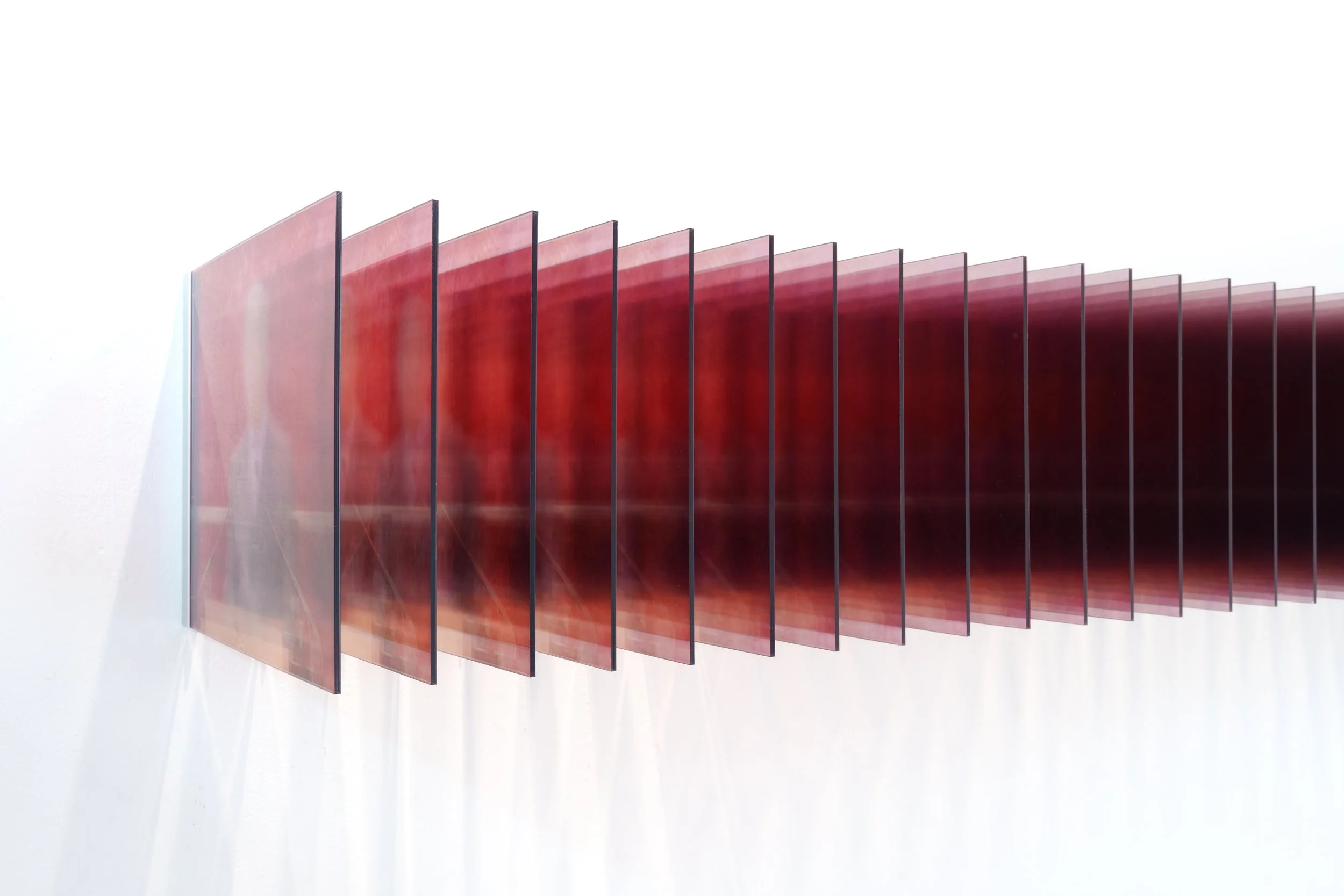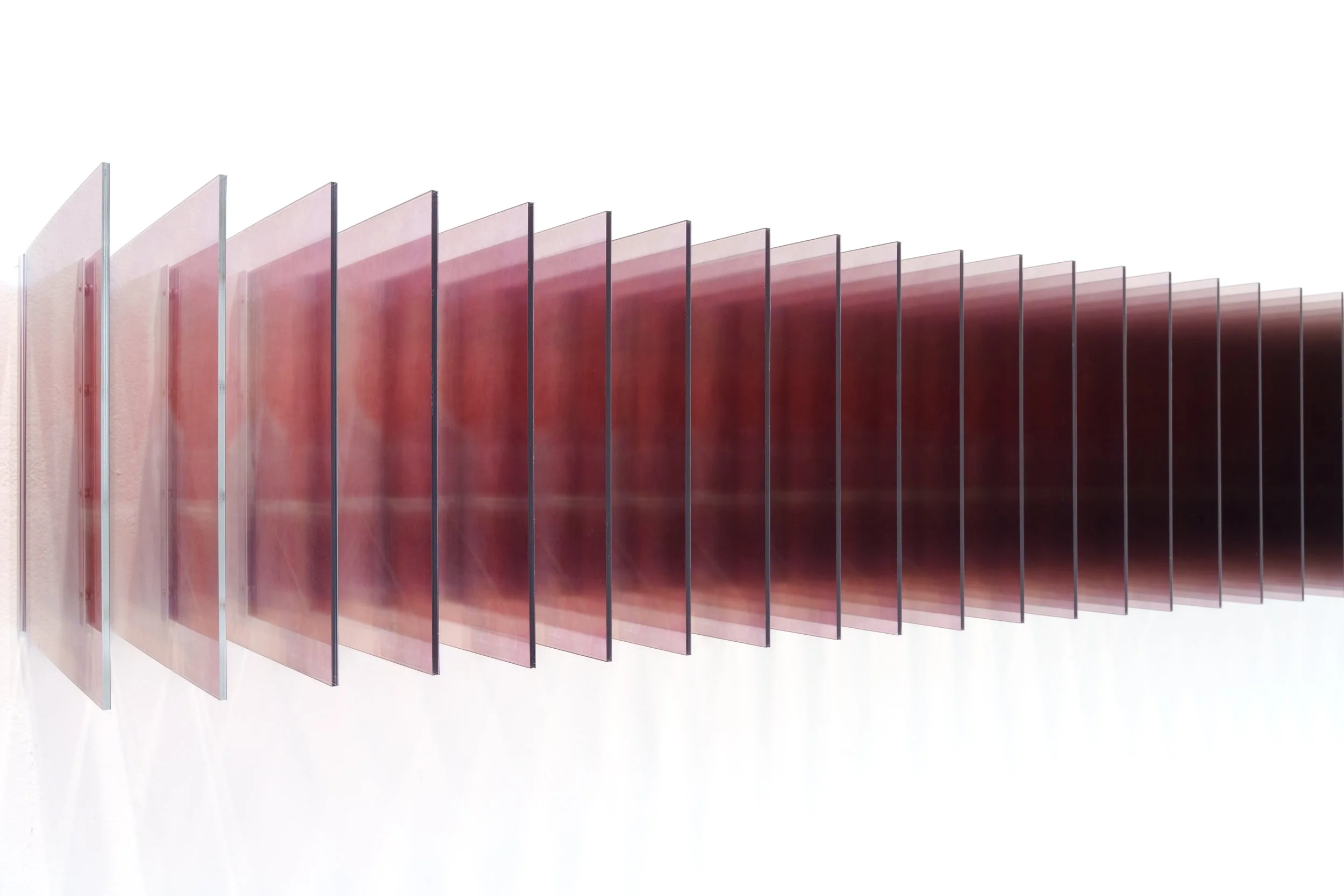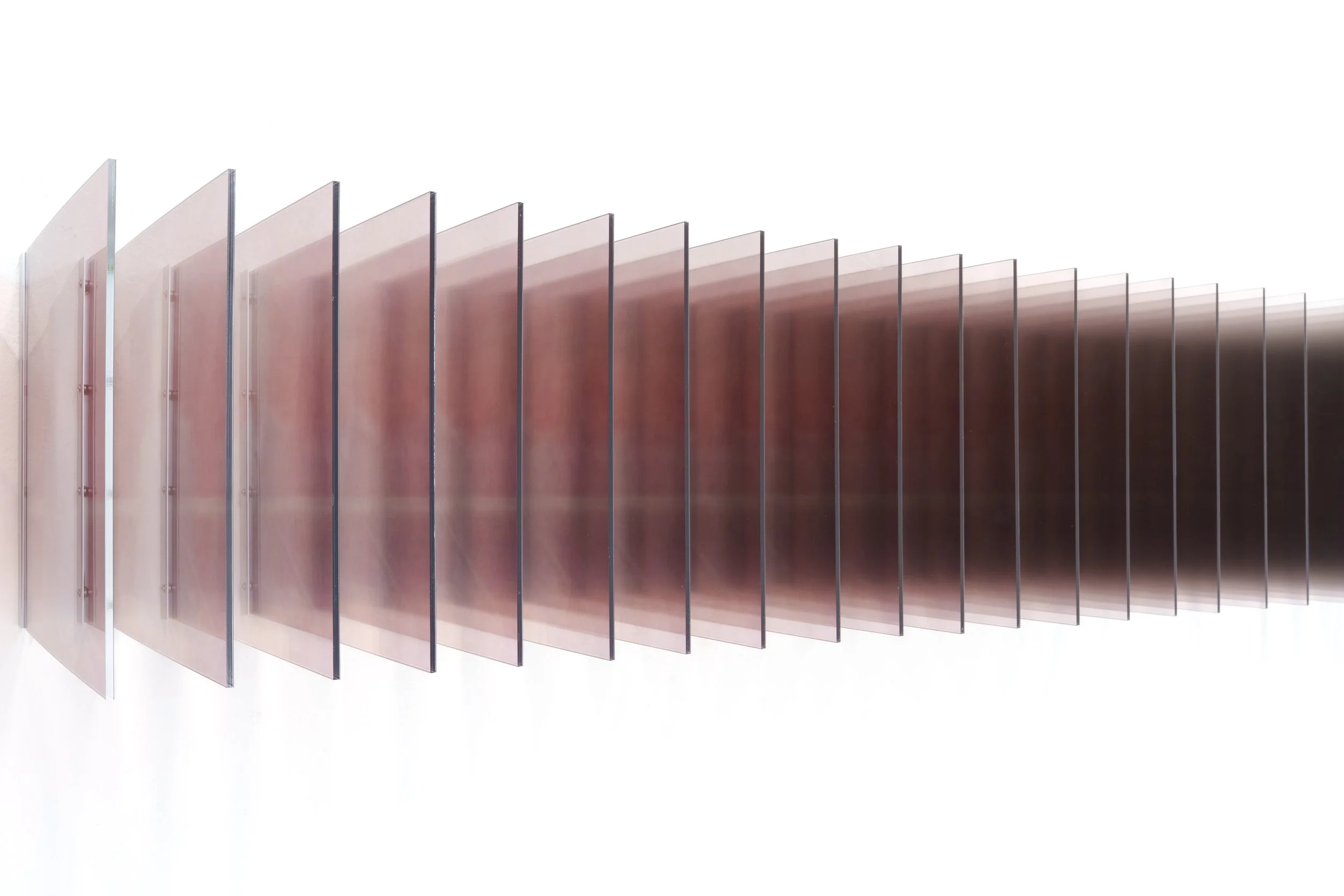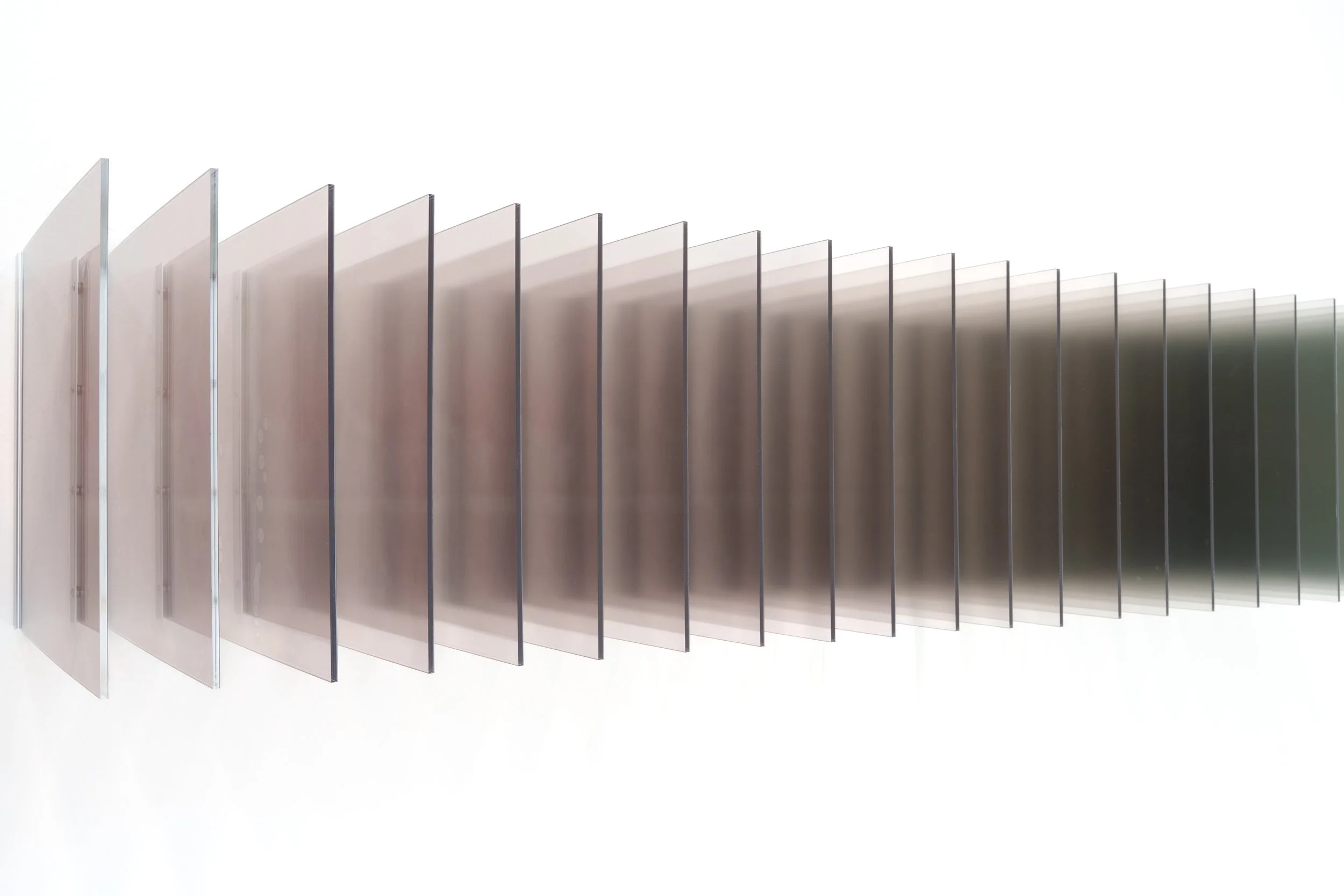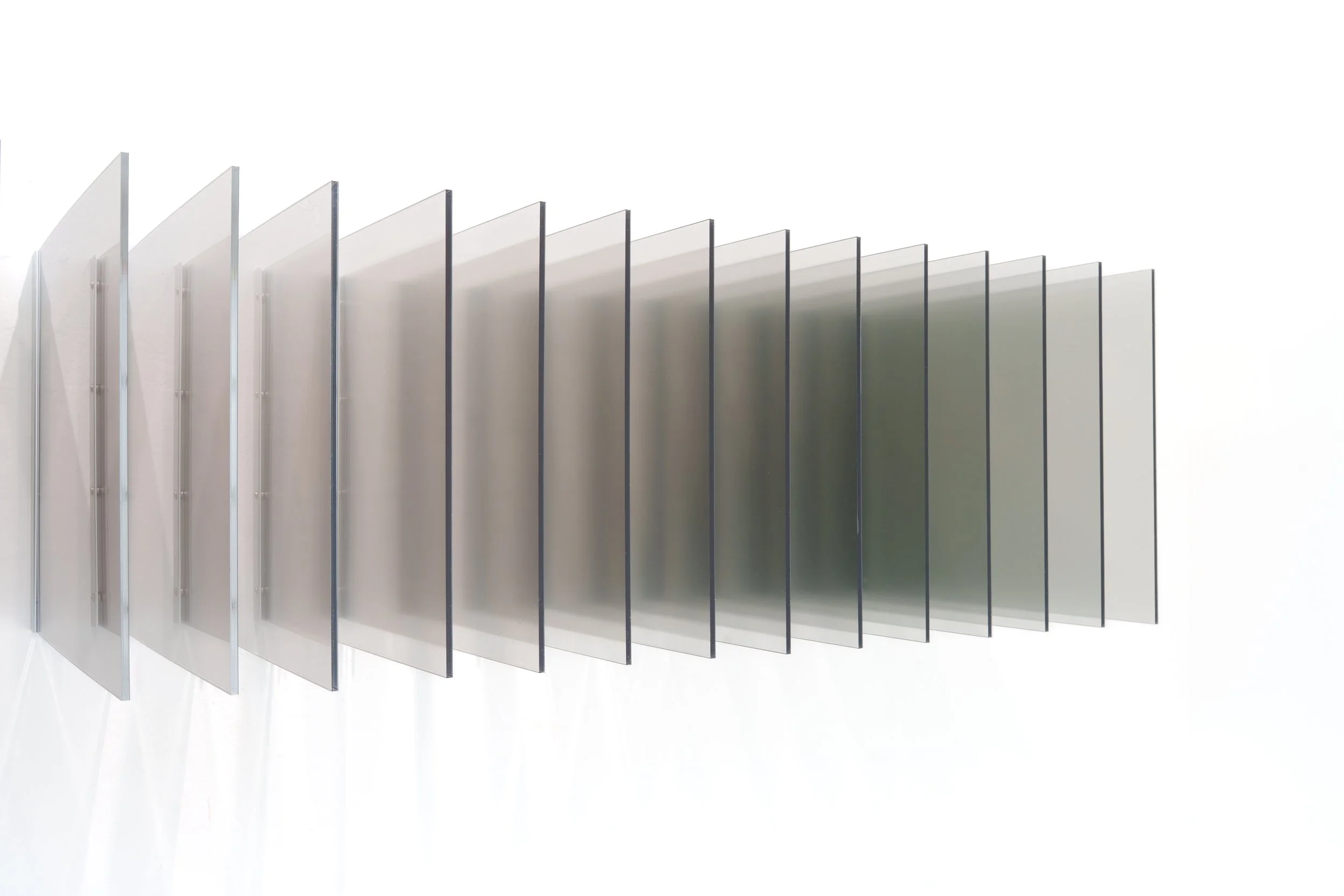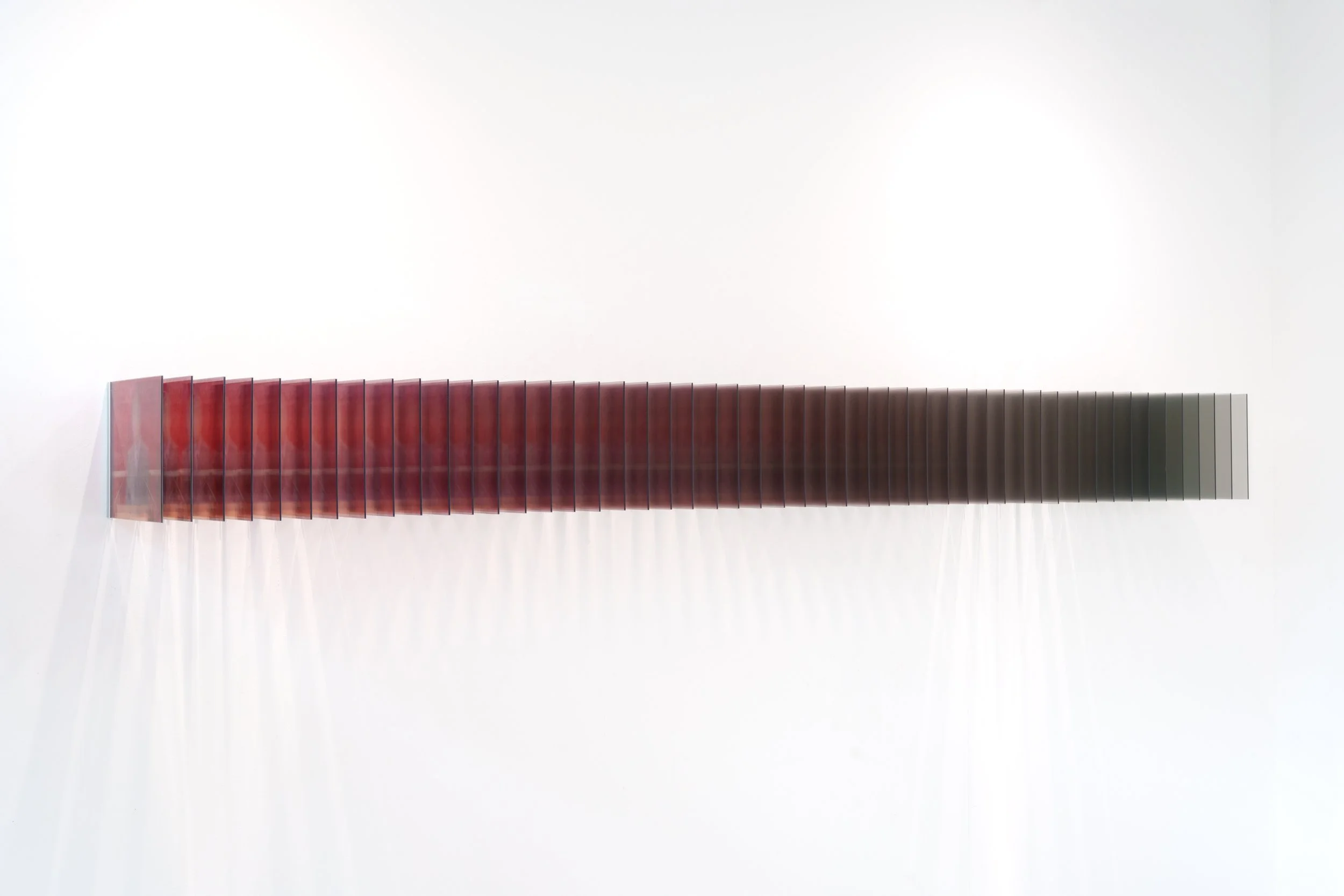
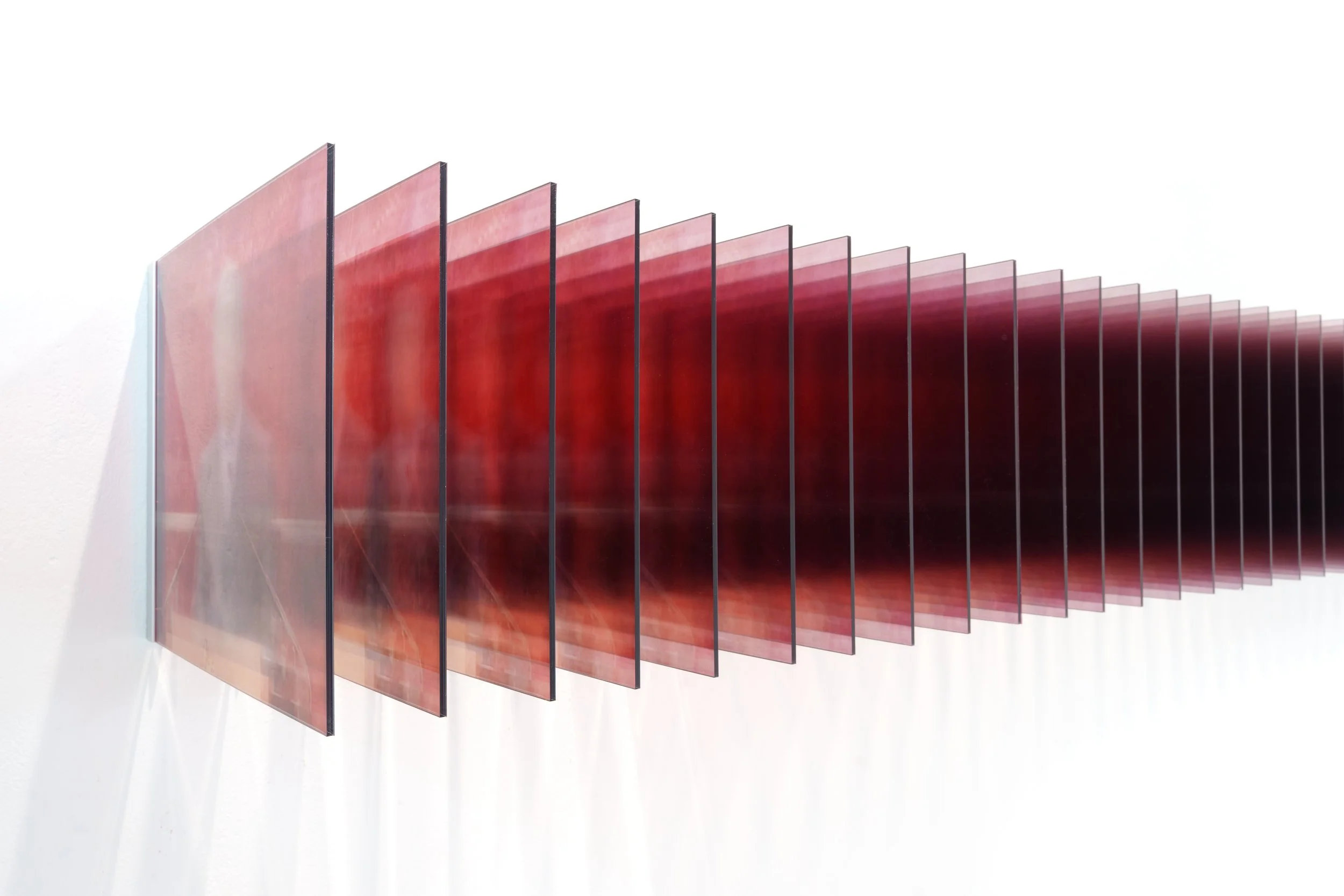
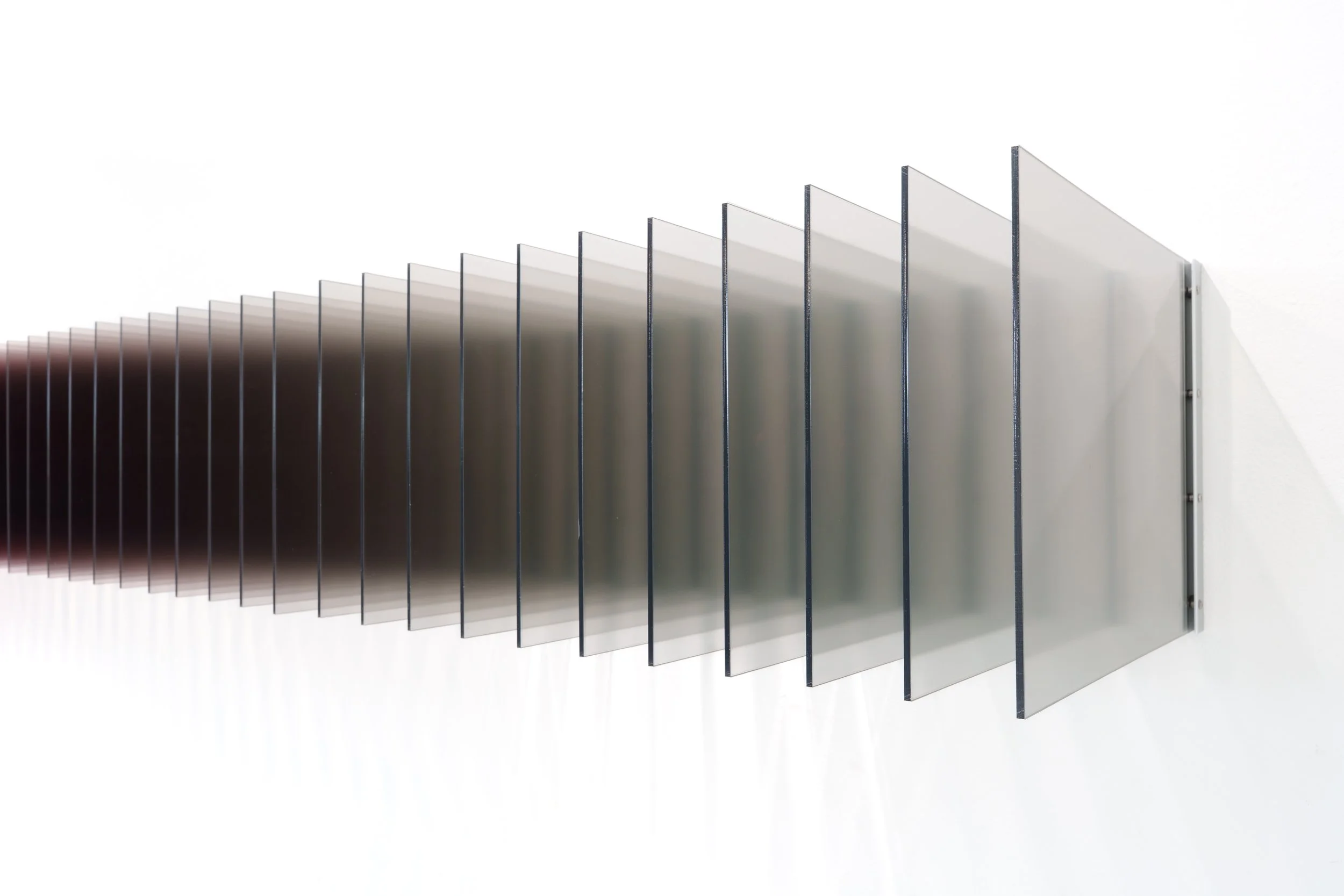
50 acrylic units, 30 × 335 × 40 cm
無題(五十年) Untitled (Fifty Years) is derived from a video recording of King Charles III’s speech at the 1997 Hong Kong Handover Ceremony. The speech marked the transfer of sovereignty from the United Kingdom to the People’s Republic of China under the framework of “one country, two systems”. The work revisits this premise within current conditions, subjecting the recorded historical moment to systematic transformation.
As a historical document circulating on the internet, the video undergoes compression across platforms and devices. In this work, the video file is subjected to iterative compression repeated fifty times. Each iteration is generated from the previous file, resulting in the progressive reduction of data. Each unit is produced as a long exposure of the video, condensing the duration of each speech into a surface.
The work follows a system in which repetition produces loss. A recorded statement marking the start of a transition period is translated into a sequence of objects. The images are materialised as a series of transparent units, forming a serial structure that extends into space as a register of duration. Across iterations, colour and detail are reduced to a monochrome grey surface, where no perceptible information from the video recording remains, leaving the image indeterminate.